
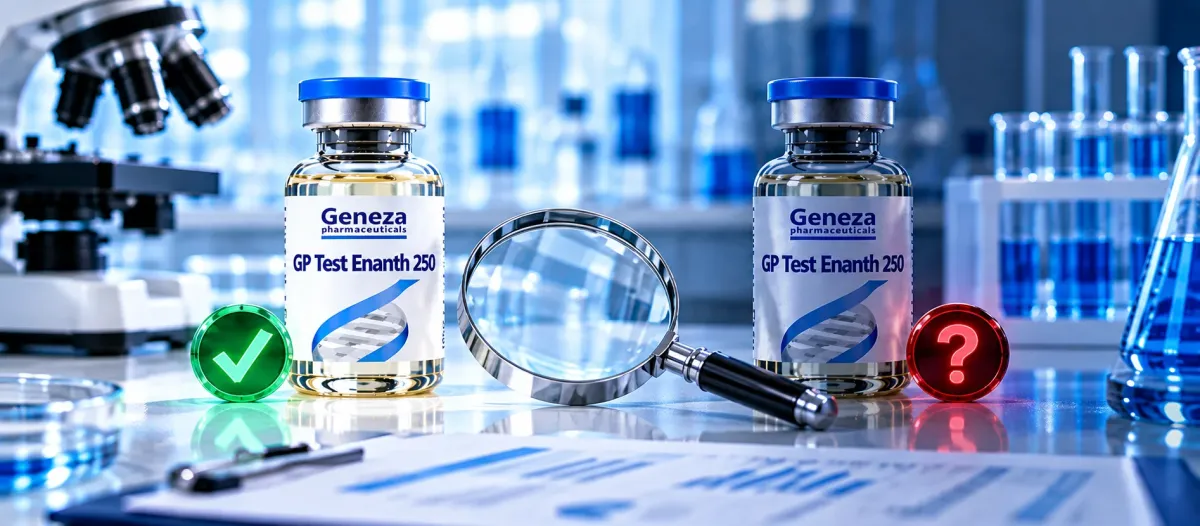
Is Geneza Pharmaceuticals Legit? Evidence, Fakes and Checks
Is Geneza Pharmaceuticals legit? Independent lab tests and forum evidence, why look-alike official sites cause doubt, and how to check a GP product first.
Two Questions Behind One Search
Is Geneza Pharmaceuticals legit? The search mixes two questions. The first is whether the brand makes real, correctly dosed steroids at all. The second is whether the vial or pouch in a buyer's hand is one of those real products or a copy. The first has a reasonably clear answer. The second can only be answered per purchase, and most of the bad experiences people post come from it.
Geneza is an underground label that sells under the GP prefix: GP Test Cyp 250, GP Oxan, GP Stan, GP Tren Enanth 200 and more. It publishes no company address or licence, like every brand in this market, so legitimacy has to be judged from outside evidence.
The brand looks legitimate on the evidence. A specific product is only as legitimate as the seller it came from, so the checks below matter more than the label.
The Case That Geneza Is Legit
Evidence for and against the brand
Independent lab tests (AnabolicLab, SIMEC AG)
GP Oxan tested above its 10 mg label; several GP injectables tested
Strong for tested batches
Years of forum reports
Mostly positive threads on Evolutionary.org and EliteFitness
Moderate
User reagent and blood tests
Reddit and forum posts confirming testosterone in GP vials
Moderate
Wide reseller distribution
Stocked by large, long-running online stores
Weak on its own
No company address or licence
Normal for the market, but nothing to verify
Neutral
The strongest single point is the independent testing. AnabolicLab paid for tests of GP Oxan, GP Test Enanth 250, GP Tren Enanth 200, GP Oxy, GP Prima 100 and GP Phenyl 100 at SIMEC AG, and the GP Oxan result came in slightly above its label. Scam brands do not usually survive lab testing, and they rarely keep a forum reputation over several years. Users also post reagent kit results and blood work from GP testosterone, which confirm the right compound at the right strength for their batch. Our Geneza Pharmaceuticals review goes through the test record in detail.
Why People Still Doubt It
Three things keep the question alive. First, fakes: any label that sells well gets copied, and counterfeit GP packaging is reported from unknown shops. Second, domains: the brand name has moved between web addresses over the years, and a 2022 forum post announcing a move to a new domain is the kind of change that makes buyers wonder whether the company is still the same. Third, and most important now, look-alike sites. Several websites call themselves the official Geneza store or offer a Geneza verification code check. None has been shown to be run by the manufacturer, and a code checker on a site that also sells the product proves nothing, because whoever prints the codes can host the database.
Doubt about these sites is healthy. It is not evidence that the brand is fake, but it does mean an online code check should never be the reason to trust a purchase.
Brand Legit vs Product Legit
Separating the two questions
Does Geneza make real products?
Yes, on the evidence
Lab tests and user blood work
Is every GP product sold online real?
No
Counterfeits and look-alike stores
Is my vial real?
Unknown until checked
Seller history, packaging, blood work
Most negative posts turn out to be product-level problems, a bad source or a fake, rather than proof that the brand itself is a scam. The reverse is also true: a good lab result from 2015 does not make a vial bought this month from a new website real.
How to Check a Geneza Product
- 1Seller first: buy only from a reseller with years of public, independent feedback. A store with no forum history is the biggest single risk.
- 2Price: GP products priced far below the usual range are the most common bait for counterfeits.
- 3Packaging: compare labels, fonts, batch and expiry formats with photos of the same batch posted by long-time users.
- 4Reagent test: a colorimetric kit confirms which compound is in the vial, though not the dose.
- 5Blood work: total testosterone two to three weeks into a cycle confirms a testosterone product is real and roughly dosed.
The full step-by-step process is in the Geneza product authenticity guide, and the questions buyers raise on Reddit are summarised in Geneza Pharmaceuticals Reddit.
Red Flags
- 1A site that claims to be the official manufacturer and also sells, ships and verifies.
- 2Prices 40 to 60 percent below established resellers.
- 3Pressure to pay in gift cards or unusual methods, or refusal of any refund policy.
- 4Packaging that differs from recent community photos of the same product and batch.
- 5A vial that causes unusual pain, cloudiness or no effect at all on blood work.
On the evidence the brand is legitimate. Independent SIMEC AG tests found GP Oxan slightly above its label, several other GP products have been tested, and forum reports over several years are mostly positive. The risk is at the product level, where counterfeits and look-alike stores sell fakes under the GP name.
Reddit threads are mixed but mostly positive about real product, with users posting reagent test and blood work results from GP testosterone. Negative posts usually trace back to unknown sellers. Reddit is also where warnings about look-alike Geneza websites and code-check sites tend to appear first.
Several sites claim to be official, under slightly different spellings, and some sell products or offer code checks. None has been shown to belong to the manufacturer. Treat any site claiming to be the official Geneza store with caution and rely on established resellers with public feedback.
Code checks exist on third-party sites, but a checker only proves something if the manufacturer controls it. For Geneza that link has not been shown. Seller history, packaging comparison, a reagent kit and blood work after two to three weeks are more reliable ways to confirm a product.
Mostly because of counterfeits sold by unknown shops, domain changes over the years and the recent wave of look-alike official sites. Those are real problems for buyers, but they concern sellers and copies rather than the brand's own products, which have tested well in independent labs.
Use a reseller with years of independent feedback, avoid prices far below the market, compare packaging with recent batch photos and confirm with blood work early in the cycle. Never rely on a code check hosted by a site that also sells the product.
GenezaPharma.review is an independent review and information platform. We are not affiliated with Geneza Pharmaceuticals, its owners, manufacturers, distributors, or retail partners. This content is for informational and review purposes only. Images on this site are illustrative artwork made for editorial purposes; they do not show real products, packaging or labels and are not an advertisement or an offer to sell.
Editorial Team
Editorial Staff
Editorial team
Comments (0)
Be the first to comment on this article.